Whale Watching Regulations in Western Australia Explained
Whale watching rules in Western Australia are regulated to protect whales, people and vessels. Whales are protected wildlife, and strict rules apply to both recreational and commercial operators under the Biodiversity Conservation Act 2016.
These regulations exist to reduce disturbance, minimise risk and ensure whale watching remains safe, ethical and sustainable for future generations.
General vessel rules for whale watching
All vessels, including recreational boats and commercial tour operators, must give whales space and allow them to move freely. Operators should always place whale welfare ahead of viewing opportunities.
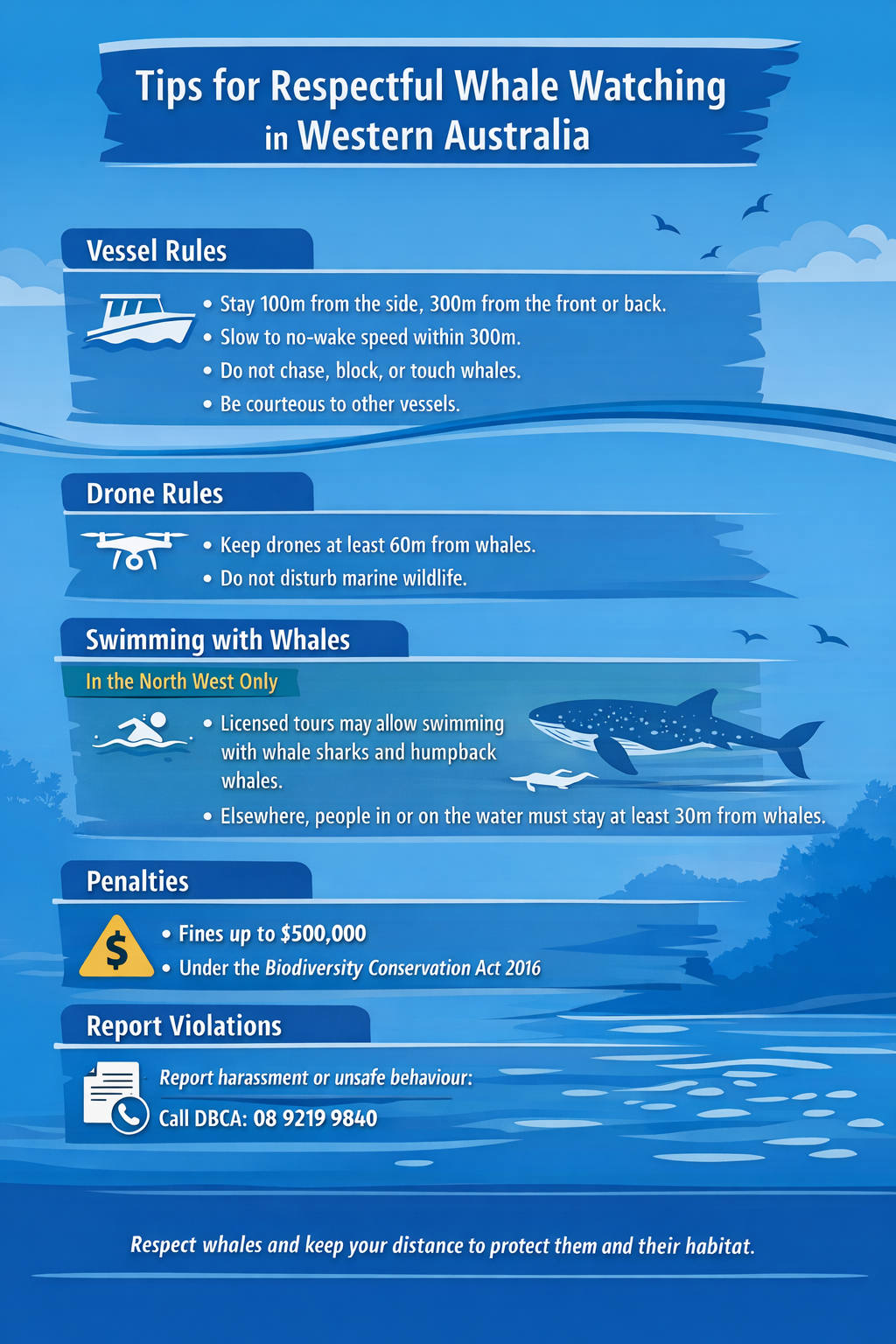
Vessels must approach whales from the side and remain at least 100 metres away. Boats must stay at least 300 metres from the front and back of a whale to avoid blocking its direction of travel or interrupting natural behaviour.
When a vessel is within 300 metres of a whale, it enters a caution zone. In this zone, boats must travel at no-wake speed, avoid sudden changes in speed or direction and remain alert to whale movements.
Vessels must never chase, crowd, block, touch or interfere with whales. Skippers should avoid repeated approaches and allow whales to determine the level of interaction. Excessive engine noise or attempts to attract attention can also disturb whales and should be avoided.
If multiple vessels are present, operators must act courteously and avoid surrounding whales or limiting their escape routes.
Drone use around whales
The use of drones around whales is tightly regulated. Drones must stay at least 60 metres away from any marine animal at all times.
Flying a drone closer than this distance is considered interference and may result in significant penalties. In many cases, permits are required for drone use near cetaceans, particularly for research or commercial purposes.
Recreational drone use near whales is strongly discouraged, as drones can cause stress, alter behaviour and increase the risk of disturbance even when flown briefly.
Licensed whale watching operators may use drones only when approved for specific regions and purposes. Drone pilots must hold appropriate aviation accreditation and operate under permits issued by the Department of Biodiversity, Conservation and Attractions.
These approvals ensure drone activity remains controlled, minimises disturbance and complies with wildlife and aviation regulations.
Swimming with whales in Western Australia
Swimming with whales is not generally permitted and is only allowed on licensed tours operating under strict conditions.
In Western Australia, licensed swimming with humpback whales occurs in areas such as Ningaloo. Swimmers must stay at least 30 metres away from whales. If a whale approaches, swimmers should attempt to maintain a distance of around 15 metres and avoid sudden movements.
A maximum of seven swimmers and two crew or photographers may be in the water at any one time. Flash or strobe photography is not permitted, as sudden light can disturb whales.
Private swimming with humpback whales and swimming from recreational vessels is prohibited.
Penalties for disturbing whales
Breaching whale watching regulations can result in significant fines, with penalties of up to $500,000 under the Biodiversity Conservation Act 2016.
Penalties apply to actions such as harassment, unsafe vessel approaches, drone misuse, blocking whale movement or interfering with natural behaviour. These laws apply equally to commercial operators and recreational users.
Reporting inappropriate whale interactions
If you observe whales being harassed or disturbed, including by activities such as jet skiing, parasailing, reckless boating or unsafe drone use, incidents can be reported to the Department of Biodiversity, Conservation and Attractions (DBCA).
Reports can be made by calling 08 9219 9840.
Detailed guidance on whale watching distances, vessel behaviour and legal obligations is available in the DBCA whale watching rules and guidelines.
Why respectful whale watching matters
Whales rely on rest, migration and feeding to survive. Disturbance can affect energy use, behaviour and long-term health, particularly during migration or when calves are present.
Responsible whale watching protects whales while allowing people to experience them safely and ethically. By following regulations and supporting operators who respect these rules, visitors help ensure Western Australia remains a world-class whale watching destination.
This information has been collected by Naturaliste Charters who operates licensed whale watching tours and killer whale expeditions across Western Australia.
All tours follow DBCA regulations, approved approach distances and strict wildlife interaction guidelines.
Experienced crew and onboard marine biologists ensure responsible practices remain central to every encounter.
Learn more about Naturaliste Charters whale watching tours and killer whale expeditions here: Naturaliste Charters
Department of Biodiversity, Conservation and Attractions (DBCA)
DBCA sets and enforces whale watching regulations in Western Australia, including approach distances, interaction rules and permits.
Australian Maritime Safety Authority (AMSA)
AMSA oversees national commercial vessel standards, safety systems and survey requirements for accredited operators.
Civil Aviation Safety Authority (CASA)
CASA regulates drone operations, pilot accreditation and aviation safety when drones are used during whale watching activities.